Neither Mary Jo Wiese nor Lisa Field grew up in Baltimore. Both found a way to put down deeper roots by investing in the people who call it home.
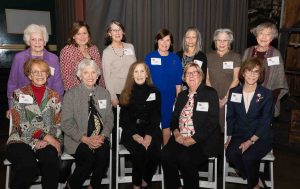
Now the new co-chairs of the Baltimore Women’s Giving Circle (BWGC), hosted by the Baltimore Community Foundation, they bring complementary perspectives: Wiese first experienced the Circle’s impact as a grant recipient; Field discovered how pooling contributions could expand her reach as a donor.
With 418 members, and entering its first year of a three-year strategic plan, the Circle is asking how to deepen its impact without losing what makes it distinctive. We spoke with Wiese and Field about what a grant can do for a local nonprofit, why participation matters, and the decisions ahead.

What can a first grant make possible beyond the dollars?
For Wiese, the answer is personal. While teaching at Goucher College, she helped run a book club at Maryland’s Correctional Institution for Women (MCIW). Working with the group, she helped create a nonprofit to expand access to college classes and degrees. Without staff, building the program was difficult. Its first grant application went to BWGC.
“Receiving that grant changed everything,” Wiese recalls. “It was instrumental in proving to us that we could get funding!”
Soon, the program attracted other funders and Goucher College stepped up to become the accrediting institution. For Wiese, the experience illustrates the importance of backing an organization before it has an established funding network. A grant can help a small nonprofit build confidence and credibility with other supporters.
“I was so grateful that they gave us that first gift,” she says. “I decided I wanted to join.”
Does giving together change the giver?
Field came to the Circle after establishing a fund through BCF honoring a retiring teacher at Greenspring Montessori School. Friends introduced her to collective giving—and a way to support more organizations than she could alone.
“Now I feel like my contribution has so much more impact and is touching so many grantees than I would by giving alone,” she says.
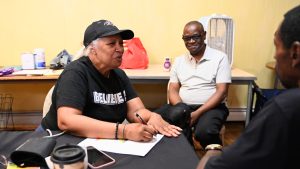
Members also pool their knowledge. Grant-review teams of eight to ten women bring different perspectives to evaluating proposals. Site visits turn written applications into a fuller understanding of the work and the communities behind it.
“It gets you out of your bubble,” Field says.
Wiese, a former grants chair, describes an education that extends beyond philanthropy: “It made me a more informed giver. I have learned so much about the city and the resilience of neighborhoods.”

Can you share organizations who are having major impact that BWGC supported in the past?
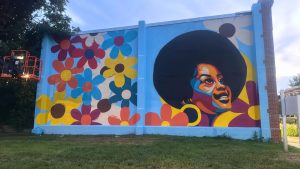
Wiese and Field point to grantees whose growth reflects the Circle’s willingness to support emerging ideas. BWGC was an early funder of Thread, a celebrated community impact organization that supports Baltimore City students, and Black Women Build, which combines job training, homeownership and block-by-block neighborhood stabilization. The Circle has also backed programs serving incarcerated women and organizations such as TurnAround, which supports survivors of sexual violence and trafficking.
Field highlights the Tahirih Justice Center, which provides legal and other services to immigrant women, and Drink at the Well, a Curtis Bay community offering wraparound support and social-enterprise opportunities for women who have survived addiction and abuse. Together, these examples show the range of the Circle’s grantmaking—and how early support can help promising organizations build momentum and extend their reach.

What does partnership look like after a grant is awarded?
The relationship does not end with a check. Twice-yearly gatherings connect grantees with one another to exchange resources and explore collaboration. Other funders have also joined these gatherings.
A Post-Grants Committee follows up on progress and changing needs. For example, when one grantee experienced a warehouse fire, the Circle helped the organization repurpose its grant rather than take the money back. That flexibility offers a concrete example of partnership: staying focused on impact even when the original plan becomes impossible.
How can the Circle evolve while honoring every member’s voice?
The strategic plan pairs practical improvements—technology upgrades, streamlined operations and greater visibility—with a larger question: how can the Circle become a more effective grantmaker while preserving the democratic culture that has guided it?
“One member, one contribution, one vote” has long defined the Circle. As members test whether a more focused approach could deepen impact—by concentrating on particular issues affecting women and girls, or on organizations at certain stages of development—they are also considering what role trust-based philanthropy might play. The co-chairs emphasize that these are questions, not settled changes: any new direction must retain the value placed on every member’s voice, and members themselves will decide.
The same commitment to participation shapes membership efforts. Evening grant-team meetings on Zoom and more hybrid options make involvement possible for women who work full-time or have non-traditional schedules. Neighborhood “Zip Code” parties create opportunities to connect and network with one another close to home.
Changes initially intended to attract younger members have drawn interest across generations—a reminder that making participation easier can benefit the whole Circle.

What would reaching $10 million in grants mean?
The Circle hopes its next grant cycle will bring cumulative giving past $10 million. The milestone is not yet assured, but the co-chairs already know whose achievement it would be: the thousands of women who have contributed over the years.
“Any celebration would reflect that shared ownership,” shared Field. The total would tell one story. The first grants, new connections and opportunities made possible would tell the rest.
Learn more about the Baltimore Women’s Giving Circle at BCF.