On a typical clinic day at Simmons Memorial Baptist Church in Baltimore’s Sandtown-Winchester neighborhood, visitors may arrive for a hot meal, a recovery meeting, or a community gathering. What many discover when they walk through the church doors is something else they desperately need: access to healthcare.
That transformation is the result of an innovative collaboration among Clergy United for the Transformation of Sandtown (CUTS), Calham Berkeley Group, Inc. (CBGI), Grace Medical Center and New Hope Treatment Center at LifeBridge Health, and an impressive network of community organizations, partially funded by the West Baltimore Renaissance Foundation. Together, they have built a new model for reaching residents who face some of the region’s highest health risks, but who often do not seek care through traditional healthcare systems.
The partners began with a simple but profound realization: many Sandtown-Winchester residents were living with high blood pressure, cardiovascular disease, diabetes, substance use disorders, and other serious health conditions. Yet they were disconnected from medical care because of transportation barriers, lack of insurance, unstable housing, limited health literacy, or mistrust of healthcare institutions.
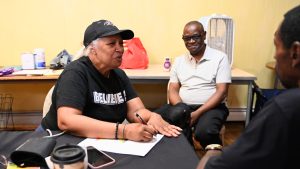
Rather than expecting residents to find their way to hospitals and clinics, the coalition decided to bring healthcare into places where trust already existed: neighborhood churches. Today, churches such as Simmons Memorial serve as one-stop service centers where residents can access blood pressure screenings, behavioral health services, substance use support, care navigation, food assistance, and referrals to primary care providers, all under one roof.
“People initially come for the food,” explained Dr. Calvin Culmer, volunteer medical director for CUTS and president and CEO of CBGI. “Then they receive treatment and support. The organizations build rapport and trust with them over time.”

Much of that trust-building begins before people ever enter the church. Outside Simmons Memorial, community outreach workers greet visitors and invite them inside.
One of them is Nick Lee, who works with Love & Cornbread and is from the Sandtown Winchester neighborhood. “I don’t want to just be inside on a Tuesday,” he said. “I stand outside in any weather and encourage them to come in.”
The approach works. According to Sue May, executive director of Love & Cornbread, the organization was invited to partner with CUTS as a way of encouraging residents to return regularly for blood pressure checks and health monitoring. Love & Cornbread employees and volunteers welcome passersby with healthy meals and warm conversation, then connect them with healthcare services inside the church.

“When people come back every week, their blood pressure is going down because they are getting continuous care,” May said. “The healthcare workers there make people feel welcome and seen in a nonjudgmental and supportive way.”
The work of the clinic extends beyond screenings. Through coordinated referrals, residents receive help completing paperwork, enrolling in insurance programs, finding primary care physicians, accessing mental health treatment, obtaining housing assistance, and navigating substance use recovery services. CUTS and its healthcare partners have also created a real-time referral system that allows participants experiencing cardiovascular crises to be quickly connected to higher levels of care through providers such as LifeBridge Health and the University of Maryland.

The clinic atmosphere reflects the mission of the collaboration. At Simmons Memorial, healthcare is not delivered as an isolated service but as part of a broader commitment to community wellbeing. “We believe in healing, helping, and pulling people to their feet,” said Reverend Simmons.

The collaboration’s focus on prevention extends beyond the clinic. With support from the Baltimore Community Foundation, CUTS, Calham Berkeley Group, Inc. (CBGI), and Love & Cornbread launched a healthy eating initiative at the Sandtown Senior Center. Seniors are sharing family recipes, learning heart-healthy cooking techniques, and helping create a project that has evolved from a cookbook into a video capturing their stories and wisdom. The effort is designed to promote healthier eating habits while training participants to serve as community health ambassadors, bringing lessons about nutrition and cardiovascular health back to their neighbors and families.
For Dr. Culmer, the goal is nothing less than changing the culture of care in West Baltimore, moving residents from an emergency-room-based approach to ongoing relationships with physicians and preventive health services.
The success of the model demonstrates what becomes possible when healthcare providers, faith leaders, nonprofits, and community residents work together. By combining trusted neighborhood institutions with medical expertise and social support, the partnership is closing gaps in care and helping residents take control of their health.