Creativity doesn’t just belong in galleries or on stages. In Baltimore, it is helping students learn, building community pride, and transforming underused spaces into vibrant places for everyone to enjoy. Through Stronger Schools and Stronger Neighborhoods grantmaking, Baltimore Community Foundation (BCF) is helping organizations use arts and culture as tools to improve education outcomes and revitalize neighborhoods, creating more opportunity for students and residents alike.
Art in the Classroom Builds Skills and Confidence
From Baltimore’s earliest learners to middle school students, arts education is strengthening classrooms and accelerating learning across the city. Arts for Learning (A4L) partners professional teaching artists with schools to deliver culturally responsive, hands-on experiences that build creativity, confidence, and academic skills across disciplines. With $30,000 in grant support from BCF, A4L is expanding music, movement, and creative play at Sandalwood Elementary School and the Sandalwood Judy Center. More than 250 Pre-K and Kindergarten students will deepen literacy, math, science, and social-emotional learning through artist residencies, while families and educators gain practical strategies to reinforce creative learning at home through family workshops and caregiver programs. This expansion builds on demonstrated results: in spring and summer 2024, A4L engaged 108 students, supported caregivers through workshops and residencies, and delivered 587 hours of high-quality, arts-integrated learning.

Building on a strong early learning foundation, Arts Every Day (AED) integrates the arts into K–8 classrooms across Baltimore City Public Schools to strengthen engagement and learning. With $35,000 in grant support from BCF, AED is partnering with Belmont Elementary School and Hamilton Elementary Middle School to implement customized Arts Action Plans aligned with each school’s goals for culture, engagement, and achievement. Students take part in weekly arts-integrated learning experiences, while teachers receive coaching and professional development to embed the arts into daily instruction. At Belmont, targeted workshops expand access for students with disabilities and gifted learners. At Hamilton, arts integration supports social-emotional learning and a positive school climate. By tailoring its approach to each community, AED shows how arts integration can drive inclusive learning and vibrant, creative school cultures.

The national nonprofit Save the Music Foundation is expanding access to instrumental music education in Baltimore City Public Schools, providing students with opportunities to build creativity and confidence. With $25,000 in grant support from BCF, Save the Music is investing in new instruments and teacher professional development at Garrett Heights Elementary and Middle Schools, Graceland Park O’Donnell Heights Elementary and Middle Schools, and Glenmount Elementary and Middle Schools. These investments will open music programs to more than 1,700 students, with ongoing support to ensure teachers are equipped to deliver high-quality instruction. By strengthening music education in Title I schools, Save the Music helps students engage more fully in school, develop social-emotional skills, and experience the long-term benefits of creative learning.
Transforming Neighborhoods Through Public Art

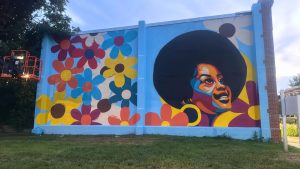
Beyond classrooms, arts programming is reshaping community spaces, turning vacant lots and underutilized spaces into public assets and vessels for community engagement. The Central Baltimore Partnership (CBP), a nonprofit coalition focused on equitable, community-driven development, works to revitalize neighborhoods through initiatives in housing, small business support, and public space activation. With $20,000 in grant support from BCF, CBP is leading Inviting Light, a public art initiative that will bring five large-scale outdoor light installations and community events to the Station North Arts District in 2025. Created by local artists including Phaan Howng, Tony Shore, and Ekene Ijeoma, the installations invite residents of all ages to gather, interact, and experience a shared cultural identity. With the goal of reaching at least 10,000 Baltimore residents, the project demonstrates how arts can activate underused spaces to foster social connection and strengthen neighborhood pride.
Similarly, the Edgar Allan Poe House and Museum, dedicated to preserving Baltimore’s literary heritage and Poe’s legacy, is turning the challenge of vacant lots around the historic Poe Homes into an opportunity for creative activation. With $20,000 in BCF support, the museum is partnering with multiple local arts organizations to implement public art on building facades and construction fencing, provide rotating exhibits, and host community engagement programs to keep the area safe, welcoming, and culturally vibrant during redevelopment.

Art as a Tool for Change
BCF’s investments go beyond traditional arts funding. By supporting programs that use arts and culture as tools for community improvement, we help students, educators, and neighbors achieve meaningful outcomes: early childhood learners build confidence and social-emotional skills, school-aged students thrive academically and personally, and entire communities benefit from safer, more vibrant public spaces.
At the Baltimore Community Foundation, we see arts and culture as strategic levers for growth.By funding programs that respond to the unique needs of schools and neighborhoods, BCF helps Greater Baltimore become a region where students are empowered, public spaces are alive with creativity, and residents feel a sense of connection and pride in the places they call home.
To learn more about our Stronger Schools and Stronger Neighborhoods Grantmaking efforts, please visit: bcf.org/stronger.